Pharma Operations
Field Guide
Batches fail. Deviation backlogs grow. COPQ quietly drains millions.
Everything here comes from real turnarounds inside pharmaceutical manufacturing.
Browse by topic
What Is the Cost of Poor Quality (COPQ) in Pharmaceutical Manufacturing?
The hidden financial drain that most pharma sites don't measure — and can't fix. This article defines COPQ in operational terms, shows how to quantify it from your existing data, and explains why it's the single most important number for a recovery program.
Read the article →Core Topics
COPQ & Cost Recovery
Quantify, track, and eliminate the hidden costs of poor quality in your operations.
Batch Execution
Restore batch reliability and build the systems that prevent repeat failures.
Deviation Investigations
Close the loop on deviations faster — with root cause that actually sticks.
Digital Manufacturing
How digital tools and systems support execution discipline at scale.
Featured Insights

Can You Write the Ship?
April 21, 2026 • By Paul Van Buskirk
AI can generate answers that look right—but what happens when teams lose the ability to build them on their own? In GxP environments, this isn’t just a technology risk—it’s a capability risk that shows up in execution, decision-making, and ultimately, Cost of Poor Quality.
Latest Insights
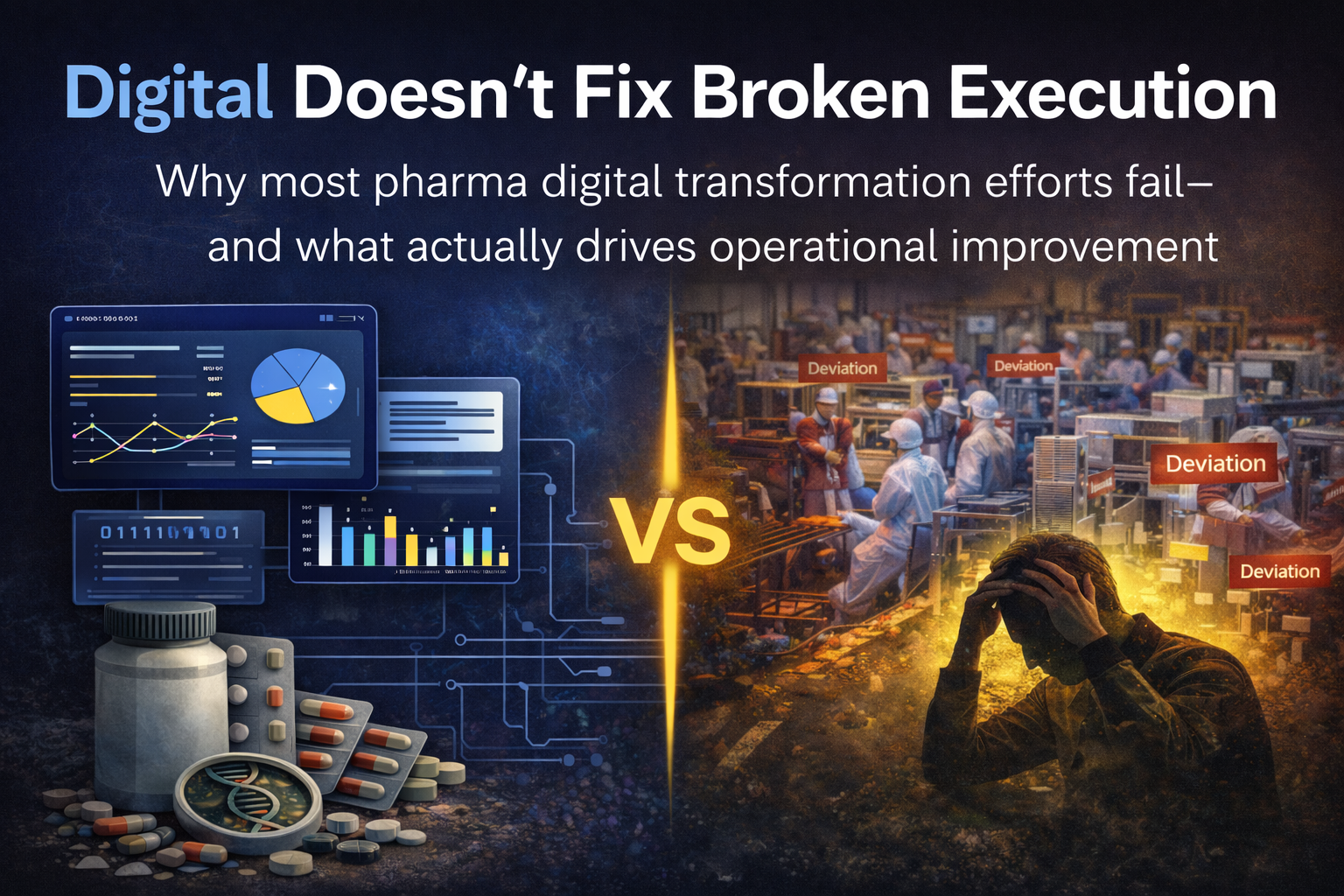
Digital Doesn’t Fix Broken Execution
April 8, 2026 • By Paul Van Buskirk
Pharmaceutical companies continue to invest heavily in digital transformation, yet operational outcomes remain unchanged. This article explains why visibility alone doesn’t improve execution—and how governance and discipline must come first.
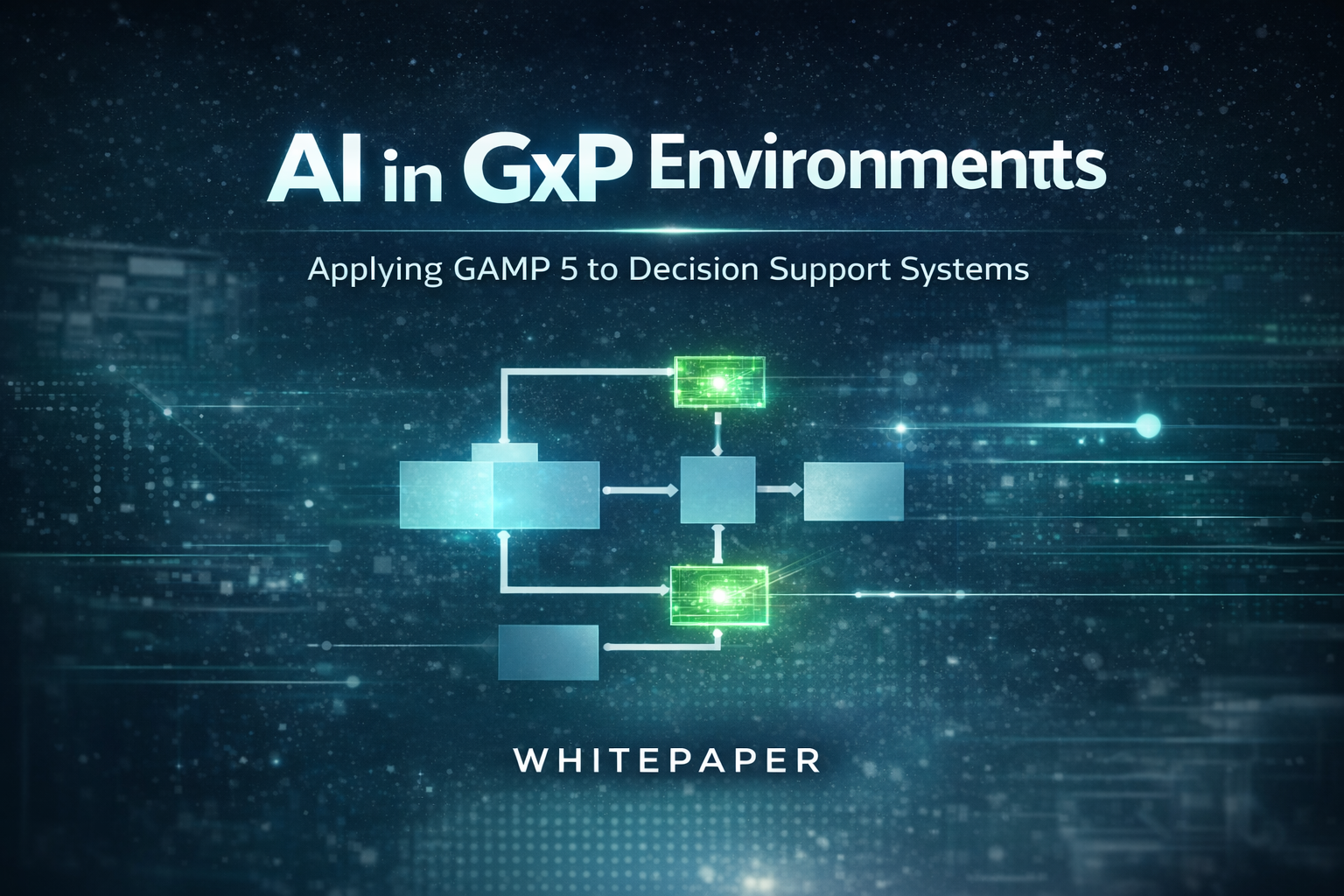
Artificial Intelligence in GxP Environments
April 6, 2026 • By Paul Van Buskirk
Artificial Intelligence (AI) in GxP environments is not a decision-making system—it is structured decision support aligned with GAMP 5. Most organizations get this wrong, positioning AI in ways that introduce unnecessary compliance risk. This whitepaper defines the correct framework—how to apply AI with discipline, maintain human ownership of decisions, and align with regulatory expectations without increasing validation burden.
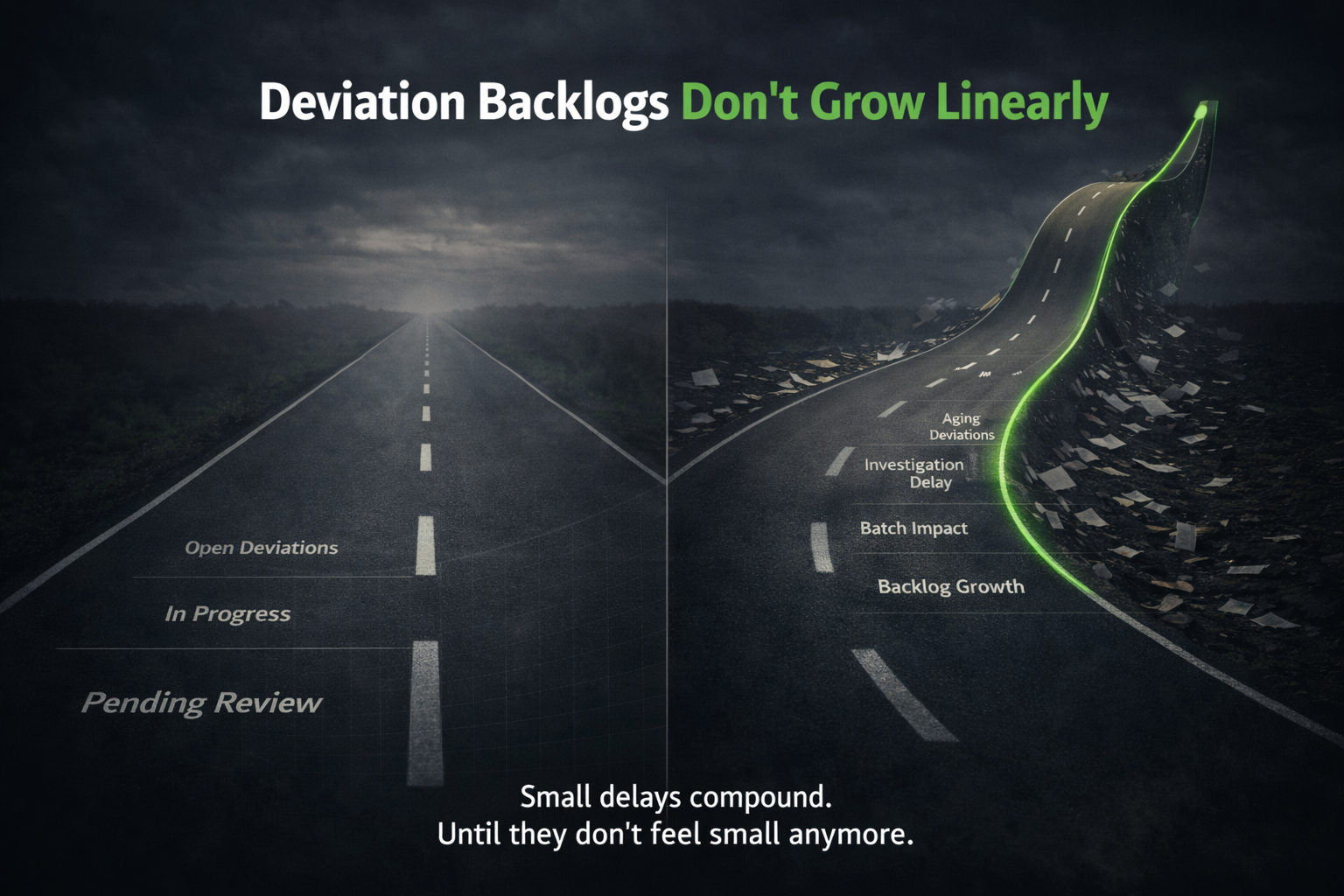
Deviation Backlogs Are Not Linear: Understanding the Hidden Factory in GMP Investigations
April 1, 2026 • By Mike Barlow
Deviation investigations are often managed as a linear workload—one record, one investigation, one unit of effort. This assumption holds only while the system operates within capacity. Once backlog forms, the system behavior changes. Effort no longer scales with the number of deviations; it expands nonlinearly as coordination, prioritization, and aging effects take over. The result is a Hidden Factory—capacity consumed not by resolving deviations, but by managing them. Understanding this shift is critical: restoring performance is not about working harder, but about re-establishing flow in a system that has crossed into exponential cost.
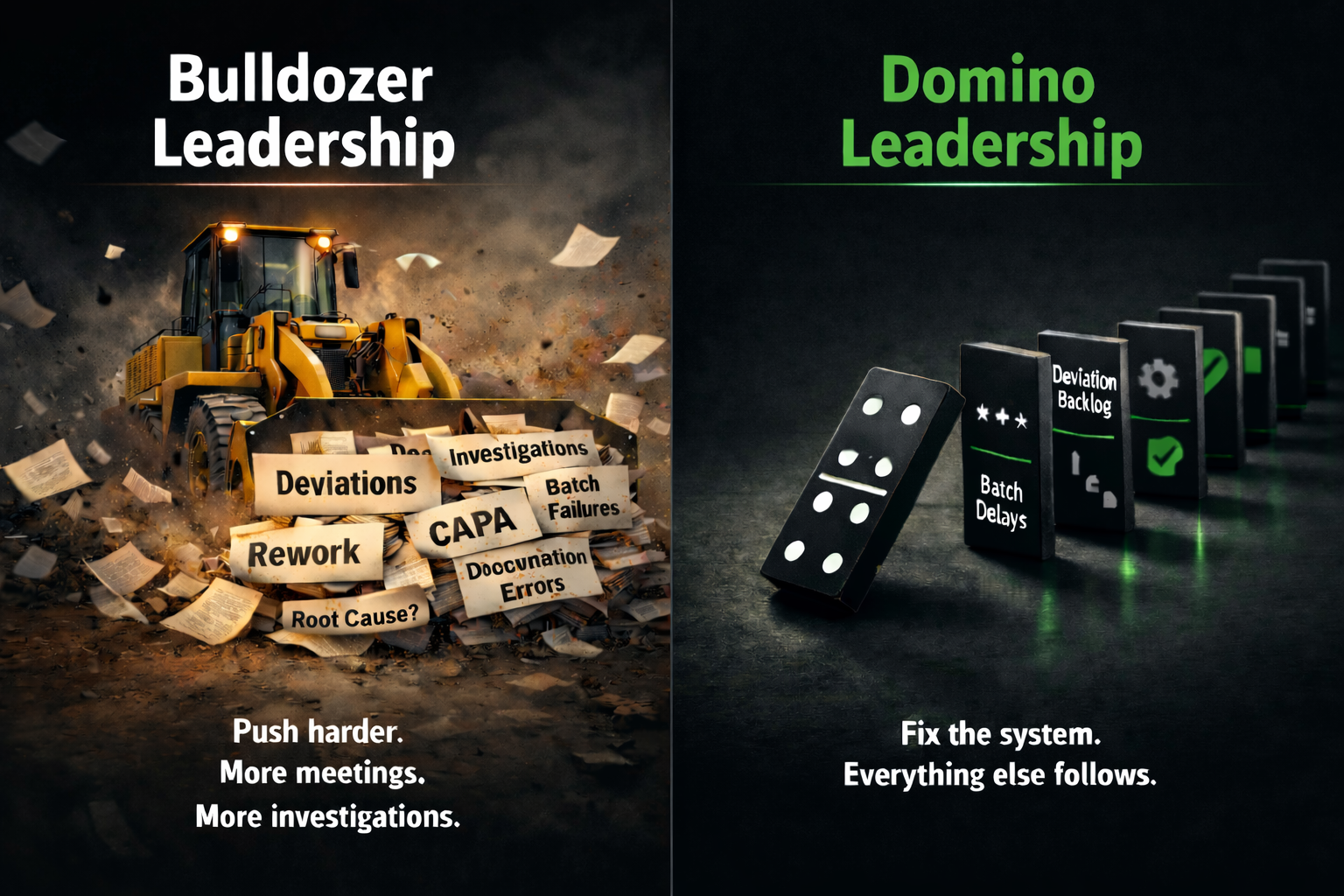
Don’t Start Conversations as a Bulldozer — Start Them as a Domino
March 25, 2026 • By Paul Van Buskirk
Most operational conversations in pharmaceutical manufacturing begin like bulldozers—forceful, reactive, and loud. Effective leaders start them like dominos: small, precise actions that trigger system-wide improvement.
GMPWit™ Whitepaper | Structured Productivity in GMP Environments
March 19, 2026 • By Paul Van Buskirk, Mike Barlow
GMPWit™ introduces structured productivity to GMP environments, improving how deviation investigations, CAPAs, and operational work are created—without impacting validated systems or regulatory compliance.
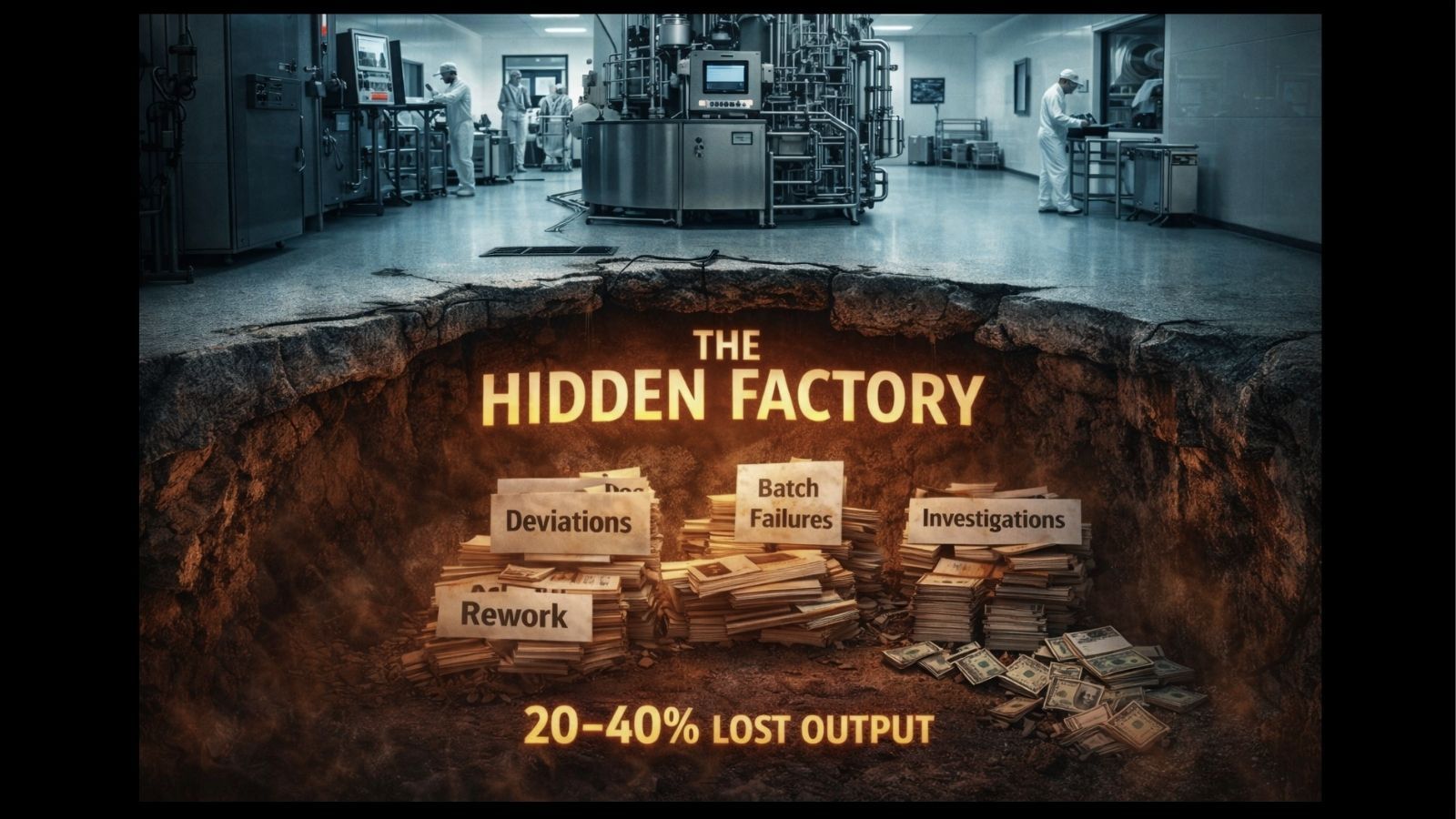
Exposing the Hidden Factory: How COPQ Reveals Capacity Constraints
March 18, 2026 • By Mike Barlow
The Hidden Factory represents unmeasured capacity consumed by internal failure activities such as deviation investigations, production rework, and documentation errors. While these activities are tracked operationally, their economic impact is rarely quantified. Applying the Cost of Quality framework translates this consumption into financial terms, providing a basis for capacity recovery and risk-informed prioritization aligned with ICH Q9 and Q10.
Turn Execution Instability Into Operational Control
Discover how GMPKit helps pharmaceutical manufacturers reduce Cost of Poor Quality, restore batch reliability, and stabilize execution in 90–120 days.